Types of Medical Assistant: Clinical, Administrative, and Specialized
- Medical Assistant
-
 Authored by
Denisse Adams
Authored by
Denisse Adams
-
 Reviewed by
Dr. Thomas Kenny
Reviewed by
Dr. Thomas Kenny
- Updated August 24, 2026
- 830 views
Medical assistants are allied healthcare professionals who perform clinical and front-office tasks in hospitals, clinics, and specialized healthcare settings. There are 3 types of medical assistants — clinical, administrative, and specialized. Clinical medical assistants work directly with the physicians, nurses, and patients to ensure proper healthcare. They earn $25,000 and $55,000 or more per year in Nevada. Administrative medical assistants work in the front office to ensure smooth organizational workflow and patient experience. They make $24,000 and $58,000 or more per year in Nevada. Specialized medical assistants work in a specific area of healthcare such as a cardiology medical assistant or dental medical assistant. They earn between $27,000 and $140,000 or more per year in Nevada.
Medical assistants mostly work in physician offices, urgent care facilities, hospitals, clinics, and other healthcare settings. Their duties differ by several organizational factors such as practice size, specialty area, and healthcare team structure. To become a medical assistant, students need to hold a high-school diploma, complete formal education and clinical training, and achieve a professional medical assistant certification.
a. Clinical Medical Assistant
A Clinical Medical Assistant (CMA), also called clinical assistants, patient care assistants (PCAs), and back-office medical assistants, is a healthcare employee who works directly with the patient, such as providing patient care, basic clinical procedures, and diagnostic tasks directly under the supervision of a physician or physician assistant, inside a medical facility. They bridge between the physician’s medical services and the patient to ensure higher-quality healthcare delivery and accurate clinical procedures.
Duties and responsibilities
Clinical medical assistants perform the following tasks inside a healthcare setting.
- Measure and record vital signs (blood pressure, temperature, pulse, respiration, and oxygen saturation), as well as patient height and weight.
- Take patient medical histories, note current medications, document chief complaints, and record allergies accurately in the Electronic Health Record (EHR).
- Perform blood draws, collect urine and tissue samples, run basic point-of-care laboratory tests (e.g., rapid strep, urinalysis), and prepare specimens for transport.
- Administer diagnostic tests, including 12-lead electrocardiograms (EKGs), visual acuity screenings, and spirometry tests.
- Administer physician-ordered medications, routine vaccines, and intramuscular or subcutaneous injections.
- Prepare exam rooms, sterilize surgical instruments, position patients, and hand instruments to providers during minor office surgeries, pap smears, or wound care procedures.
Nevada regulations
As unlicensed personnel, medical assistants in Las Vegas perform clinical duties strictly under provider delegation. Furthermore, under Nevada Revised Statutes (NRS) Chapter 630 & Nevada Administrative Code (NAC) Chapter 630, clinical medical assistants in Clark County must comply with state regulations regarding in-person provider oversight, documented clinical competency, and state-recognized phlebotomy requirements. They are strictly prohibited from sub-delegating tasks to other staff members or administering unconscious or semiconscious anesthesia.
Salary
A clinical medical assistant in Las Vegas earns between $25,000 and $55,000 or more per year, which is approximately $19.53 per hour, $781/week, or $3,385/month, according to Ziprecruiter. Clinical assistants who make the most money include medical assistants in cardiology, medical specialties, and Certified Clinical Medical Assistant (CCMA).

b. Administrative Medical Assistant
An Administrative Medical Assistant (AMA), also called a clerical medical assistant, medical secretary, medical office administrator, or front-office medical assistant, is a healthcare employee who manages front-desk operations, medical records, patient communications, and financial workflows inside a medical facility. They bridge the gap between administrative operations and the patient to ensure a seamless and efficient organizational workflow.
Duties and responsibilities
Administrative medical assistants perform the following tasks inside a healthcare setting.
- Manage patient intake and check-in, verify personal details, collect copays, and update demographic information upon arrival.
- Schedule and coordinate appointments, manage physician calendars, confirm patient visits, and arrange specialist referrals.
- Maintain electronic health records (EHRs), update patient charts, process medical record requests, and securely file diagnostic lab reports.
- Process insurance verification, billing, and coding, submit claims using ICD-10 and CPT codes, handle prior authorizations, and resolve billing inquiries.
- Handle front-office communications, answering multiline phone systems, directing patient inquiries, and managing incoming mail, emails, and faxes.
- Coordinate patient flow and office logistics, track appointment wait times, order office supplies, and ensure compliance with office management standards.
Nevada regulations
As unlicensed personnel, medical assistants in Las Vegas perform administrative duties under provider delegation. Under Nevada Revised Statutes (NRS) Chapter 630 & Nevada Administrative Code (NAC) Chapter 630, administrative medical assistants in Clark County must strictly comply with patient privacy laws (HIPAA), record-keeping protocols, and facility delegation guidelines. They are strictly prohibited from performing independent clinical tasks, offering medical advice over the phone, or making medical triage determinations without direct provider approval.
Salary
An administrative medical assistant in Las Vegas earns between $24,000 and $58,000 or more per year, which is approximately $20.00 per hour, $800/week, or $3,500/month, according to Ziprecruiter. Administrative assistants who make the most money include managers, medical liaisons, medical assistant floats, and certified medical administrative assistants (CMAA), and clerical assistants working in surgical centers, hospital networks, or specialized medical practices.
What are the differences between clinical medical assistants and administrative medical assistants?
The main difference between clinical medical assistants and administrative medical assistants is their domain of tasks; clinical assistants work in a high-pressure environment directly with the physicians and patients, whereas administrative assistants work in the front office. While clinical assistants are responsible for ensuring better healthcare, administrative assistants are responsible for maintaining smooth organizational work as a business.
Other differences between clinical and administrative medical assistants are as follows.
| Aspects | Clinical Medical Assistant | Administrative Medical Assistant |
| Primary focus | Direct, hands-on patient care and provider assistance. | Front-office operations, administration, and medical records. |
| Procedural tasks | Administers injections/immunizations, performs phlebotomy, runs 12-lead EKGs, collects swab specimens, and sterilizes surgical instruments. | Operates electronic health record (EHR) practice management modules, processes prior authorizations, inputs CPT/ICD-10 coding, and handles medical records requests. |
| Collaboration with physicians | Directly assists the provider in real time during exams, procedures, and patient intake sessions. | Executes standing orders for referral processing, sign-offs, prior authorization queues, and chart preparation ahead of patient visits. |
| Working hours | Variable; often includes shift work, on-call duty, or weekend/evening shifts depending on facility type. | Standard business hours; aligns strictly with regular office/clinic operating hours. |
| Workplace | “Back-office,” exam rooms, diagnostic labs, and treatment areas. | “Front-office,” reception desks, waiting rooms, and billing offices. |
| Regulatory & compliance focus | Adheres to Clinical Laboratory Improvement Amendments (CLIA waived tests), OSHA bloodborne pathogen standards, and medical waste compliance. | Adheres to Health Insurance Portability and Accountability Act (HIPAA), HITECH Act, and financial billing compliance rules. |
| Patient touchpoint | Hands-on physical contact, measuring baseline biometrics, taking medical histories, and explaining immediate clinical/procedural steps. | Digital and verbal communication (phone, portal, front-counter), verifying identity/demographics, collecting copays, and managing patient scheduling logistics. |
| Credentialing pathways | CMA (AAMA), RMA (AMT), CCMA (NHA), or NCMA (NCCT). | CMAA (NHA) or CEHRS ( NHA). |
c. Specialized Medical Assistant
A specialized medical assistant is an experienced or advanced-credentialed medical assistant who focuses on working in a specific branch of healthcare such as dermatology, dental, cardiology, podiatry, or OB/GYN. They assist specialized physicians and surgeons, support advanced clinical procedures, targeted patient education, and specialized department logistics to deliver higher-precision care and streamlined practice workflows.
Duties and responsibilities
Specialized medical assistants perform advanced, branch-specific tasks inside specialty clinics, outpatient surgical centers, and hospital departments as follows.
- Perform specialty-specific diagnostic testing, such as running 12-lead EKGs and cardiac stress tests in cardiology, or conducting visual field, tonometry, and autorefraction tests in ophthalmology.
- Assist providers during advanced office procedures, including skin biopsies and laser therapies in dermatology, pelvic exams and prenatal screenings in OB/GYN, or casting and splinting in orthopedics.
- Maintain, calibrate, and sterilize specialized equipment, managing delicate surgical trays, eye lane instruments, dermatologic cautery units, and biohazard waste.
- Deliver targeted patient education, instructing patients on complex post-procedure wound care, home glucose monitoring, cardiac drug regimens, or post-surgical recovery protocols.
- Manage specialized clinical logistics, handling prior authorizations for specialty drugs/biologics, tracking pathology specimen workflows, and processing referrals.
Nevada regulation
Specialized medical assistants in Las Vegas perform advanced clinical duties strictly under provider delegation. Under Nevada Revised Statutes (NRS) Chapter 630 & Nevada Administrative Code (NAC) Chapter 630, specialized medical assistants in Clark County must strictly comply with state regulations regarding in-person provider oversight during invasive procedures (NAC 630.810), documented specialty competency, and state-recognized phlebotomy certification. They are strictly prohibited from making independent diagnoses, initiating treatment plans, sub-delegating tasks to other staff members, or administering IV medications and unconscious or semiconscious anesthesia.
Salary
A specialized medical assistant in Las Vegas earns between $27,000 and $140,000 or more per year, which varies by the specialty they work in; for example, ophthalmology medical assistants earn between $27,000 and $57,000, medical assistants in cardiology earn between $28,000 and more than $62,000, and medical assistants in surgical centers earn between $28,000 and more than 133,000. Salary ranges among specialty medical assistants depend on their certification and experience as well.
Which medical assistant specialties are in the highest demand?
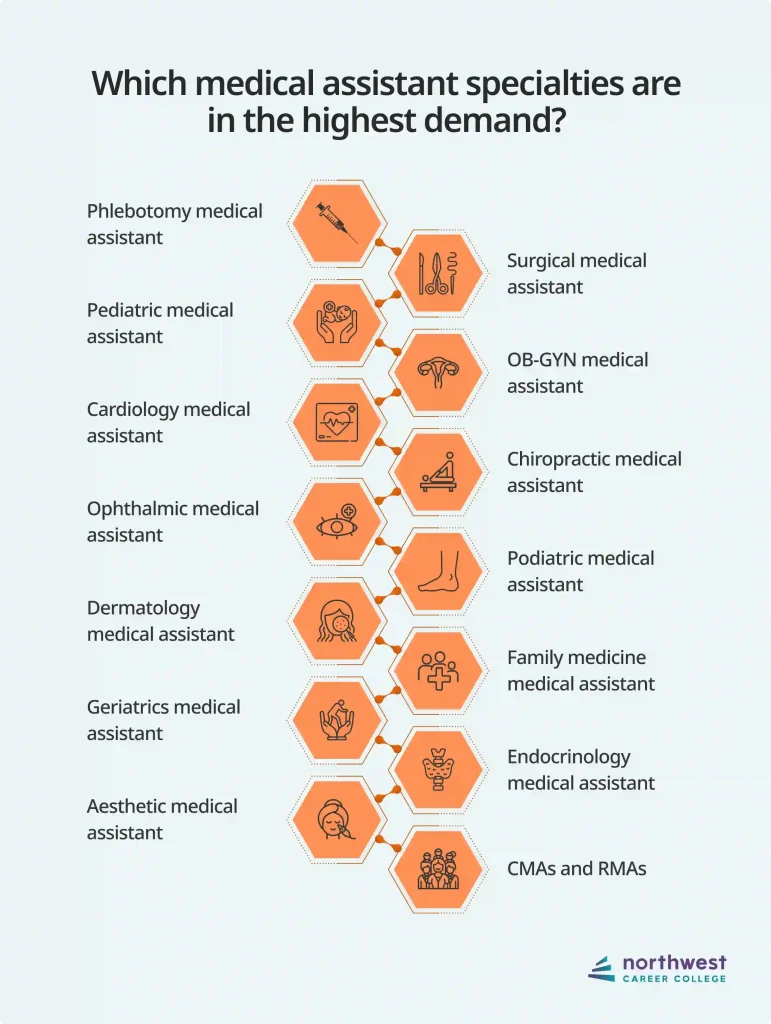
Medical assistant specialties that are in the highest demand include phlebotomy, surgical, pediatric, OB-GYN, cardiology, and chiropractic.
A list of 14 high-demand medical assistant specialties and credentialing paths is as follows.
- Phlebotomy medical assistant: They specialize in safe blood draws, venipuncture techniques, fluid collection, and precise lab specimen processing for diagnostic testing.
- Surgical medical assistant: They maintain sterile fields, prepare operating rooms, pass instruments to surgeons, and assist with complex, hands-on invasive procedures.
- Pediatric medical assistant: They excel in calming children, administering pediatric immunizations, tracking growth milestones, and communicating effectively with worried parents.
- OB-GYN medical assistant: They support women’s health by preparing pelvic exams, assisting with prenatal checks, and handling sensitive reproductive health screenings.
- Cardiology medical assistant: They operate advanced cardiac equipment, perform complex 12-lead EKGs, and set up critical Holter monitors for heart tracking.
- Chiropractic medical assistant: They focus on musculoskeletal health, managing patient positioning, therapeutic modalities, and assisting with manual spinal adjustment setups.
- Ophthalmic/Ophthalmologic medical assistant: They specialize in vision care, measuring intraocular pressure, testing visual fields, and operating advanced eye diagnostic imaging machinery.
- Podiatric/Podiatry medical assistant: They focus strictly on lower extremities, assisting with minor foot surgeries, wound care, casting, and taking specialized X-rays.
- Dermatology medical assistant: They assist with skin biopsies, surgical excisions, mole removals, and documenting detailed skin lesions for precise medical mapping.
- Family medicine medical assistant: They master versatility, treating patients of all ages while managing diverse preventative screenings and chronic disease care plans.
- Geriatrics medical assistant: They specialize in elderly care, managing multiple chronic conditions, mobility assistance, and communicating with patience and deep empathy.
- Endocrinology medical assistant: They focus on hormonal disorders, tracking blood glucose patterns, managing thyroid data, and educating patients on insulin use.
- Aesthetic medical assistant: They support cosmetic dermatology and plastic surgery, assisting with chemical peels, laser treatments, and anti-aging filler procedures.
- Certified medical assistants and registered medical assistants: They hold formal credentials proving national competency, which grants legal authority to enter medication orders and lead clinical teams.
Where do medical assistants work?
Medical assistants work in physician practices, urgent care facilities, outpatient care centers, specialty clinics, and large hospitals. Most medical assistants (57%) work in the offices of physicians; others work in hospitals, state, local, and private clinics (17%), outpatient care centers (10%), and offices of other health practitioners (7%), according to the U.S. Bureau of Labor Statistics (BLS).
Medical assistants’ workplaces define the shifting times and roles they perform. Inside physicians’ offices and private clinics, medical assistants work as cross-trained generalists (standard 8-hour weekday shifts), handling the entire workflow, both clinical and administrative duties, from checking in patients to processing billing claims. In urgent care facilities (extended 10–12-hour shifts, including evenings and weekends), they perform rapid triage, point-of-care testing, and procedure prep. In hospitals and large healthcare systems (operating on rotating 12-hour day/night shifts), they usually work in specialized, compartmentalized roles such as clinical floor support or front-office work.
Though medical assistants’ responsibilities are mostly direct and physical, healthcare reforms/policy changes and an increasing aged population across the US have shaped how they work. Modern medical assistants provide their services in 3 different ways.
- On-site medical assistants: Work physically inside clinics, hospitals, and any healthcare facilities. They conduct hands-on clinical duties (vitals, phlebotomy, procedure assistance) and front-desk administrative tasks directly under provider supervision.
- Hybrid medical assistants: Split shifts between home and clinical facilities; medical assistants have to perform both in-person floor shifts and remote virtual support.
- Remote medical assistant/virtual medical assistants: Work 100% off-site (home offices) and work in virtual practices, telehealth companies, or call centers. They handle non-clinical administrative workflow, patient coordination, and billing operations without physical patient contact.
To work as a virtual medical assistant, you need the following setup.
| Category | Equipment |
| Hardware | Dual-monitor computer setup, encrypted router, noise-canceling VoIP headset, etc. |
| Software | HIPAA-compliant VPNs, Electronic Health Record (EHR) systems, softphone software, encrypted messaging, portal tools, etc. |
What qualifications are required to be a medical assistant?
There are 3 qualifications required to be a medical assistant: a high school diploma, which is the prerequisite, formal education and clinical training from an accredited program, and a professional certification.
1. A high school diploma. The high school diploma or GED is the fundamental baseline requirement, which means candidates must be 18 years old to enroll in a formal training program, earn national certification, or work in medical settings.
2. Formal education and clinical training. Instead of a 4-year college degree; alternatively, they can complete 3- to 6-month accelerated programs, a 9-12 month diploma program (offering both theoretical and externship) from an accredited institute, or an associate degree, which takes 2-years.
3. Professional certification. National medical assistant certifications such as CMA, CCMA, and Nevada’s employers require candidates to complete their MA program to comply with eligibility and legal compliance. Among general credentials, the CMA (Certified Medical Assistant) from the AAMA commands the highest industry recognition and baseline pay, and it is considered the gold standard. Also, certified medical assistants and registered medical assistants experience higher career trajectory, task allowance, and starting compensation than uncertified or unregistered medical assistants.
Medical assistants need to maintain their certification credential to stay active and work in Nevada as follows.
| Certification | Issuing body | Recertification frequency | Renewal requirements |
| Certified Medical Assistant (CMA) | American Association of Medical Assistants (AAMA) | Every 5 years | Complete 60 CEUs (Continuing Education Units) OR pass the recertification exam. |
| Certified Clinical Medical Assistant (CCMA) | National Healthcareer Association (NHA) | Every 2 years | Complete 10 CE credits + pay renewal fee. |
| Registered Medical Assistant (RMA) | American Medical Technologists (AMT) | Every 3 years | Complete 30 CCP points (Certification Continuation Program) + pay annual maintenance fee. |
| National Certified Medical Assistant (NCMA) | National Center for Competency Testing (NCCT) | Every 1 year (Annually) | Complete 14 CE contact hours + pay annual recertification fee. |
| Certified Medical Administrative Assistant (CMAA) | National Healthcareer Association (NHA) | Every 2 years | Complete 10 CE credits + pay renewal fee |
How to choose the right medical assistant specialty for career advancement?
To choose the right medical assistant specialty for career advancement, consider pay structure and growth potential, prioritize your goals, identify your work style, prioritize your soft skill strengths, and consider micro-credential pathways.
- Look for a specialty with high pay & growth potential
Analyze the industry, because different specialties offer different levels of compensation, clinical responsibility, and work hours. Evaluate the top-tier advancement tracks such as cardiology, outpatient surgery, dermatology, and ophthalmology. Employers pay more to MAs having specialized hands-on skills, such as running EKGs, managing cardiac monitors, or prepping sterile fields for biopsies.
- Take note of your goals
Choose a specialty that gives you the exact exposure you need for your future goals; for example, if you want to learn specialized coding, complex insurance authorizations, and advanced EHR management, choose to work in healthcare management or informatics; or if you want to have a job with work-life balance without evening or weekend call, you can choose to work in pediatrics or dermatology.
- Identify your work-style preference
Choose urgent care or emergency medicine if you like high-velocity, fast-paced work environments and enjoy diverse patient complaints. If you prefer working in routine and predictable work, choose specialty departments, such as pediatrics or oncology.
- Prioritize your soft-skill strengths
Consider your personal traits and learned skills; which ones you prefer to do willingly. Decide whether your natural personality fits better on the clinical or administrative side; for example, empathy & communication skills suit clinical duty, and being organized and attentive works well for administrative duty.
- Consider micro-credential pathways
Pick fields that offer quick, stackable certificates like Certified EKG Technician (CET) or Certified Phlebotomy Technician (CPT). These boost your clinical skills and resume without forcing you to go back to college. Also, before leaving, ask the current employer if you can shadow a specialty MA to have a first-hand learning experience at work.

Why consider becoming a specialized medical assistant?
Becoming a specialized medical assistant leads to higher salary potential, job satisfaction and purpose, allows you to select your ideal workplace, and provides strong job security.
- Higher earning potential: Specialty MAs command higher wages because practices pay a premium for niche skills like running EKGs or preparing surgical biopsies.
- Greater job satisfaction & purpose: Focusing on a specific field lets you align daily work with personal interests, building deeper, more rewarding patient connections.
- Ability to select your ideal workplace: Specialization lets you choose your environment, swapping unpredictable hospital shifts for predictable weekday hours in private or outpatient clinics.
- Faster career advancement: Gaining experience with complex clinical tools and specialty coding makes you a top candidate for lead and managerial roles.
- Stronger job security: An aging population drives high patient volume in specialty practices, ensuring steady, long-term employment for trained medical assistants.
What career paths can an medical assistant lead to?
A medical assistant degree leads to diverse career paths: entry-level MAs, clinical MAs during entry-level, clinical coordinator, EHR health records specialist at the mid-tier level, and lead/senior MAs, and physician assistants at the advanced tier. Completing an accredited program and earning a national certification leads to higher career opportunities such as a licensed practical nurse (LPN) or practice manager. Without restarting their education, they can transition to specialized fields after earning their certification through transferable skills, employer-sponsored cross-training, and targeted certification upgrades. After becoming a medical assistant, they can proceed towards distinct healthcare careers, which include healthcare administration & management, allied health & specialized medical roles, and advanced clinical roles.
Is formal medical assistant training mandatory when on-the-job training exists?
Yes, formal medical assistant training is mandatory when on-the-job training exists because healthcare facilities and malpractice insurers require accredited education to prevent costly medical errors and minimize liability. OJT provides a faster entry, but a formally educated medical assistant gets versatile career opportunities, a higher pay scale, complying with clinical and legal boundaries compared to an OJT peer. Moreover, National certification bodies (such as the AAMA and AMT) and major healthcare systems require completion of an accredited postsecondary program as a non-negotiable prerequisite for credentialing, state regulatory compliance, and unsupervised clinical practice.