3 Common Mistakes in Dental Tools Sterilization and How to Avoid Them
- Dental Assistant
-
 Authored by
Jessica Vazquez
Authored by
Jessica Vazquez
- Updated December 4, 2025
- 2.2k views
When you become a Dental Assistant, sterilization is a crucial skill you’ll need to learn. You will help the dentist by preparing, organizing, and handing over dental tools during procedures.
In a dental clinic, you must ensure every instrument is clean, sterilized, and ready to use so the dentist can focus on treating the patient safely and efficiently. Knowing these common mistakes before you start your career can help you feel more confident and prepared.
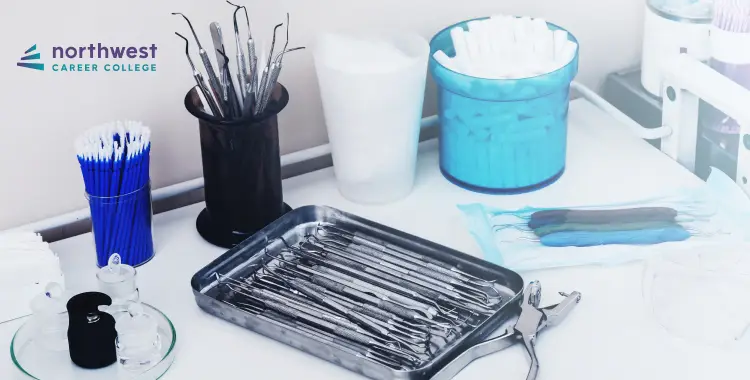
Improper Instrument Cleaning Before Sterilization
It might seem like throwing tools straight into the autoclave is enough, but that’s not how it works. Sterilization occurs after the instruments are thoroughly cleaned. That means no leftover blood, saliva, or bits of tissue are on them. The autoclave will not perform its function correctly if you skip or rush through this initial cleaning step. Germs can hide under leftover debris, and the tools might look clean, but they are unsafe.
Overloading the Autoclave
It’s tempting to cram in as many tools as possible to “get it done” quicker, but stuffing the autoclave can block steam from reaching all areas. Some tools won’t get thoroughly sterilized if the steam doesn’t touch every surface.
This mistake can cause some instruments to come out still carrying dangerous bacteria, even if everything looks fine from the outside.
Follow your training and the machine’s guidelines. Spread out the instruments, leave space between trays, and never force in extra tools. It’s better to run an extra load than to risk someone’s safety.

Skipping Sterilization Logs and Indicators
Sterilization isn’t just about cleaning the tools. It’s also about proving that you did it correctly. That’s where sterilization logs and chemical indicators come in.
If you forget to check the indicator strips or skip writing in the log, you cannot be sure the process worked. If something goes wrong later, you will also have no proof that you followed the proper steps, which can lead to trouble.
Always use indicator strips and check them after each cycle. Log every load, what was inside, the date, and the results. This keeps you organized, responsible, and ready in case anyone needs to double-check.
Why Getting It Right Matters
Every patient who walks through the door trusts you, and every dentist you work with depends on your skills to keep the tools safe and ready. These sterilization steps may seem small, but they’re part of something much bigger: infection control, patient care, and your professional growth.
Getting it right also means protecting yourself. Accidental exposure or cross-contamination can hurt you as much as it can hurt the person in the chair.
When you learn how to sterilize properly, you’re not just “cleaning”, you’re building the habits of a responsible, trusted dental assistant.

Conclusion
Every dental assistant begins by learning the basics, including what not to do. Sterilization isn’t hard, but it takes focus and proper habits.
Avoiding these three common mistakes will help protect your patients, dental team, and future in this exciting field. Don’t wait to build strong skills.
Enroll at Northwest Career College and get the hands-on training to become a safe, skilled, and confident dental assistant—starting from day one.